Face
November 12, 2026
5
min read

Why Your Face Ages And What You Can Do About It

Ms Lauren BennettClinic Manager & Aesthetic Therapist

Have you noticed your face looks a little less defined lately, or your skin doesn't feel as firm as it used to? Facial ageing is completely natural, but understanding what's actually happening beneath the surface is the first step towards choosing treatments that genuinely work.

How Does The Face Age?

Facial ageing doesn't happen overnight, and it doesn't start as late as most people think. Changes can begin as early as your mid-to-late 20s, long before they become visible. The process is gradual, but it's driven by several things happening at once - in the skin, beneath it, and in the structural layers below.

In short, ageing isn't just a skin-deep concern. The face is made up of multiple layers - skin, fat, muscle and bone, and each one changes over time.

As the face ages, four key changes tend to occur together:

  • Collagen declines, reducing firmness and elasticity
  • Fat pads shrink and shift, altering facial contour
  • Muscle tone reduces, affecting support and lift
  • Skin quality changes, leading to fine lines and uneven texture

Collagen Decline: Why Skin Becomes Less Firm

What Is Collagen and Why Does It Matter?

Collagen is the structural protein that keeps your skin firm, plump and supported. Think of it as the scaffolding beneath the surface - it gives skin its shape and helps it bounce back. Alongside elastin (which gives skin its flexibility), collagen is what makes young skin look smooth and resilient.

As collagen breaks down, the skin becomes thinner, less elastic and less able to hold its structure. It loses that ability to "snap back", and over time, this shows.

At What Age Does Collagen Decline?

Collagen production typically begins to slow from your late 20s, earlier than most people expect. The decline is gradual at first, which is why many people don't notice visible changes until their mid-30s or early 40s. By the time sagging or fine lines become apparent, the process has often been underway for years.

The rate of collagen decline is also influenced by genetics, sun exposure, smoking, diet and stress. Two people of the same age can experience very different rates of change. After menopause, the drop in oestrogen causes collagen levels to fall more sharply. This is why many women notice a more significant shift in their skin around this time.

How Collagen Loss Changes the Face

The effects of collagen decline aren't limited to fine lines. As the skin loses its structural support, you may also notice:

  • Skin that feels less firm or "bouncy" to the touch
  • Fine lines forming (particularly around the eyes and mouth)
  • Early sagging around the jawline or cheeks
  • A slightly more tired or less defined appearance overall

These changes are often subtle at first. But because collagen loss is cumulative, they tend to become more noticeable over time without any intervention.

Facial Fat Pads and Ageing: Why Volume Shifts

When we're younger, fat sits evenly distributed across the face. This is what gives it fullness, lift and that naturally rounded, youthful shape. It's not something most people think about, but facial fat plays a surprisingly significant role in how young or rested we look.

What Happens to Fat Pads Over Time

As we age, the fat pads in the face don't just shrink, they also shift downwards. This redistribution is one of the main reasons the face gradually changes shape, even in people who haven't lost weight.

The effects are easy to recognise once you know what to look for:

  • Hollowing beneath the eyes, creating a tired or shadowed look
  • Loss of volume in the cheeks, making the face appear flatter
  • Heaviness developing in the lower face and along the jaw
  • The early formation of jowls as tissue descends

The face essentially transitions from a lifted, heart-shaped appearance to one that's fuller at the bottom. It's this shift, more than wrinkles alone, that tends to age a face most significantly.

Why the Face Starts to Sag

What Causes Sagging Skin on the Face?

Facial sagging isn't caused by one thing - it's the combined result of everything above happening at the same time. Collagen loss weakens the skin's structure. Fat pads shift and thin. Muscle tone reduces, removing the internal support that helps keep features lifted. And the underlying bone structure, which provides the foundation for everything above it, also remodels with age.

When these changes happen together, the result is a gradual loss of definition, particularly along the jawline, around the cheeks and under the chin. This is why sagging face treatment works best when it addresses more than one layer. Treating the skin alone, without considering the muscle and structural support beneath, often delivers limited results.

Can You Improve Facial Ageing Without Surgery?

The short answer is yes, and the options have improved significantly in recent years. Modern non-surgical treatments are designed to address the underlying causes of facial ageing rather than simply smoothing the surface.

The most effective approaches aim to stimulate collagen production, improve skin quality, support muscle tone and restore natural facial structure. They work across multiple layers for results that look gradual and authentic rather than sudden or overdone.

At Reshape Clinic, we focus on treatments that work with your skin's natural processes. The goal is never a dramatic change - it's subtle, progressive improvement that makes you look like a well-rested version of yourself.

Best Anti-Ageing Treatments for the Face

EMFace: Muscle Tone and Skin Tightening in One Treatment

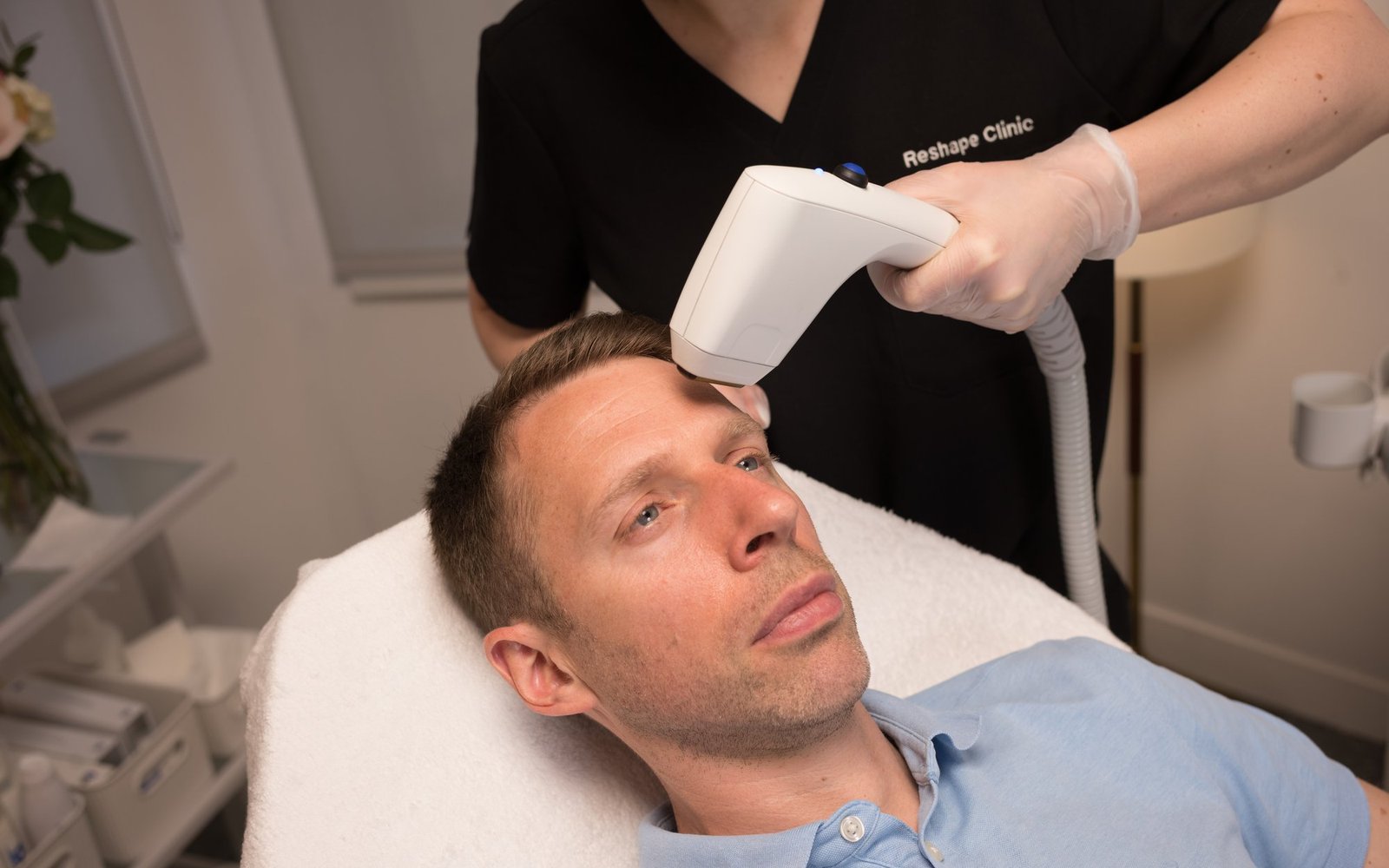
EMFace is one of the most innovative non-surgical treatments available for facial ageing. It is often described as a non-surgical face lift because it targets both the skin and the underlying muscles simultaneously, with no needles and no downtime.

It works by combining two technologies in a single session:

  • Radiofrequency (RF) to stimulate collagen and elastin production in the skin
  • HIFES technology to strengthen and tone the facial muscles beneath

This dual approach means EMFace can address skin laxity and loss of structural support at the same time - something most treatments can't do. It's commonly used for brow lifting, cheek lifting, jawline contouring and under-eye smoothing. Clinical studies have shown meaningful improvements in collagen, elastin and muscle tone, with visible lifting and definition developing over a course of sessions.

If you're looking for the best treatment for lower face sagging or a non-invasive way to restore facial definition, EMFace is worth considering. Explore EMFace at Reshape Clinic.

Exion: Skin Tightening and Structural Renewal

Exion is a non-invasive skin tightening treatment that uses a combination of radiofrequency and ultrasound to improve skin structure, quality and tone. It works at a deeper level than surface skincare, supporting the skin's own collagen and elastin production from within.

Depending on your concerns, Exion can also be combined with RF microneedling or Clear RF micro-ablation for enhanced results. It's commonly used for:

  • Skin laxity on the face and neck (making it a strong option for those looking for the best treatment for sagging face and neck)
  • Jawline and under-eye tightening
  • Post-weight loss skin changes
  • Overall skin smoothing and texture improvement

Results develop gradually over two to three months as collagen and elastin rebuild. This means the improvements look natural and continue to develop even after your course of treatment is complete. Explore Exion at Reshape Clinic.

FAQs

At what age does collagen start to decline?

Collagen production typically begins to slow from your late 20s, with more noticeable changes developing through your 30s and 40s. After menopause, the decline can accelerate due to falling oestrogen levels. Genetics, sun exposure and lifestyle factors all influence how quickly the effects become visible.

What is the best anti-ageing treatment for the face?

The honest answer is that it depends on which changes bother you most. If fine lines and skin quality are your main concern, treatments that stimulate collagen, like Exion, tend to work well. If you're noticing loss of lift and definition, something that also works on the muscle layer, like EMFace, will deliver more. Most people benefit from a combination of both. A consultation is the best way to work out what's right for your skin specifically.

What is the best treatment for a sagging face?

Sagging happens across multiple layers - skin, fat and muscle. The most effective anti-sagging face treatments therefore address more than one of them. At Reshape Clinic, we often combine EMFace (for muscle tone and lift) with Exion (for skin tightening) to treat both the structural and surface causes of sagging together. This tends to give more well-rounded, natural-looking results than treating one layer in isolation.

What is the best treatment for lower face sagging?

Lower face sagging, including jowls, loss of jaw definition and heaviness around the chin, responds well to treatments that address both the skin and the muscle layer beneath. EMFace in particular is designed to lift and contour the lower face, and is often combined with Exion for skin tightening in the same area.

How long does it take to see results from non-surgical face treatments?

Most non-surgical treatments for facial ageing work by stimulating the skin's own collagen production, which means results develop gradually over weeks to months rather than immediately. EMFace and Exion both show progressive improvement over 2-3 months, with results continuing to build after a course of treatment is complete.

Does sun exposure really speed up facial ageing?

Yes. UV exposure is one of the biggest external contributors to collagen breakdown and accelerated skin ageing. It damages collagen fibres, reduces skin elasticity and contributes to uneven tone and pigmentation. Consistent SPF use is one of the most evidence-backed things you can do to slow the visible signs of ageing, regardless of what treatments you're having.

Key Takeaways

Facial ageing is a gradual process involving changes across multiple layers - collagen, fat and muscle, not just the surface of the skin. Understanding this is what makes the difference between treatments that genuinely help and ones that only scratch the surface.

If you're noticing changes you'd like to address, book a consultation at Reshape Clinic. We'll assess your skin properly, explain what's driving the changes you're seeing, and recommend the most effective approach for your goals.
‍

More articles

Sofwave: Benefits, Results and What to Expect

Face

5
min read

Sofwave: Benefits, Results and What to Expect

Thinking about Sofwave but not sure what it actually does or how it compares to other treatments? This guide explains how Sofwave works, what results to expect, and how it compares to HIFU and RF microneedling.

What Is Sofwave and How Does It Work?

Sofwave is a non-surgical skin tightening treatment that uses next-generation ultrasound technology to stimulate collagen, elastin and hyaluronic acid within the skin. These are the building blocks of firm, smooth, youthful-looking skin. They naturally decline as we age.

What makes Sofwave different is where it delivers its energy. The ultrasound cylinders travel horizontally within the mid-dermis - the layer most responsible for skin firmness and structure, rather than penetrating into the tissue below. This gives it a precise, controlled depth of action that sets it apart from other ultrasound treatments.

The result is gradual lifting and tightening as new collagen builds over time. It does so without disrupting the surrounding tissue or the layers beneath the skin's surface.

What Are the Benefits of Sofwave?

The benefits of Sofwave go beyond simple skin tightening. Because it stimulates your skin's own collagen and elastin, results look natural and develop gradually over time.

Key benefits include:

  • Lifts and firms the skin on both the face and body
  • Stimulates up to 40% more collagen and elastin
  • Improves skin texture, smoothness and overall quality
  • No needles, no surgery and no downtime
  • Suitable for all skin tones and types
  • Results continue to develop for up to 12 weeks after treatment

For many clients, one of the biggest advantages is the precision of the treatment. Sofwave targets the mid-dermis specifically, delivering consistent and predictable results. Other treatments that penetrate more deeply come with more unpredictability.

Does Sofwave Tighten Skin?

Yes, and this is exactly what it's designed to do. Sofwave skin tightening works by triggering the skin's natural repair response. The ultrasound energy creates a controlled thermal effect in the mid-dermis. This stimulates the production of new collagen and elastin fibres over time.

As these fibres rebuild and strengthen, the skin becomes firmer, smoother and more defined. Most clients notice a gradual tightening and lifting effect that develops over 8-12 weeks. Results continue to improve even after the treatment course is complete.

Does Sofwave Melt Fat?

This is one of the most common questions we hear. It's an important one, particularly for anyone who may be concerned about unwanted volume loss in the face.

The answer is no, Sofwave does not melt fat. Because the ultrasound energy travels horizontally within the mid-dermis, it does not reach the subcutaneous fat layer beneath the skin. It is designed specifically to stimulate collagen and improve firmness - not to reduce or disrupt fat volume.

For many clients, this is actually a significant advantage. Facial volume plays a big role in a youthful appearance, and losing it can make the face look older rather than more refreshed. Sofwave tightens the skin without touching the fat beneath. This means you get the lift without the risk of hollowing.

How Does Sofwave Compare to Other Treatments?

Sofwave vs HIFU: What's the Difference?

When comparing Sofwave vs HIFU, the key difference comes down to how deeply each treatment delivers its energy.

HIFU (High Intensity Focused Ultrasound) penetrates more deeply, reaching the SMAS layer - the structural tissue beneath the fat. This can produce a strong lifting effect. However, because the energy travels through the fat layer on its way down, it can sometimes lead to unwanted volume loss. For clients who are already lean or have thinner faces, this is worth considering carefully.

Sofwave stays within the mid-dermis and does not reach fat or deeper structural tissue. This makes it a more controlled and predictable option. It's particularly beneficial for clients who want visible skin tightening without facial hollowing.

Sofwave vs RF Microneedling: Which Is Right for You?

Another common question is how Sofwave compares to microneedling.

Both treatments stimulate collagen and improve skin quality. However, they work differently and suit different concerns. Sofwave uses ultrasound to target the mid-dermis, making it particularly effective for lifting and firming. RF microneedling delivers radiofrequency energy through fine needles into the skin, targeting both the surface and deeper layers. This makes it especially effective for skin texture, fine lines, open pores and scarring.

When considering Sofwave vs RF microneedling, the choice often comes down to your primary concern. If laxity and loss of definition are your main focus, Sofwave tends to be the stronger option. If overall skin quality and texture are the priority, RF microneedling like Exion may be more suitable. In many cases, we recommend both, used together or across a treatment plan, for the most comprehensive results.

Is Sofwave an Alternative to a Facelift?

Sofwave is not a replacement for a surgical facelift. If you have significant skin laxity or want a dramatic structural change, surgery will still deliver results that non-surgical treatments can't fully replicate.

That said, for clients with mild to moderate laxity who want natural, gradual improvement without surgery or downtime, Sofwave can deliver genuinely visible results. Many clients use it to maintain their skin in the years before surgery might be considered, or to keep on top of early changes as they appear. The goal is always a refreshed, well-rested version of yourself, not an obvious transformation.

Can Sofwave Be Used on the Body?

Good news - Sofwave isn't just for the face. Sofwave for body skin tightening is increasingly popular, particularly among women dealing with laxity after pregnancy, weight loss, or as part of natural ageing.

Common body treatment areas include:

  • Postpartum abdomen: where the skin has stretched and lost elasticity after pregnancy
  • Upper arms: particularly where the skin feels crepey or loose
  • Thighs and knees: where laxity can develop with age or weight changes
  • Buttocks and abdomen: for overall firming and smoothing

It's important to be clear about what Sofwave body treatment is designed to do. It works best where the concern is skin quality and laxity, not fat reduction. For postpartum clients or those who have lost weight and are left with looser, crepey skin, Sofwave can make a meaningful difference. Sofwave body before and after results typically show smoother, firmer skin with improved tone and texture over time.

What Results Can You Expect from Sofwave?

Results from Sofwave develop gradually as collagen rebuilds beneath the surface. Most clients begin to notice a subtle lift and improved firmness within a few weeks. Full results are typically visible at around 8-12 weeks after treatment.

Sofwave skin tightening before and after results tend to show natural refinement - tighter, smoother skin, more defined contours and improved overall texture, rather than a sudden or dramatic change. Collagen continues to build for up to 3-6 months, which means the results keep improving even after your sessions are complete. Many clients choose a follow-up treatment every 6-12 months to maintain their results over time.

Sofwave Before and After

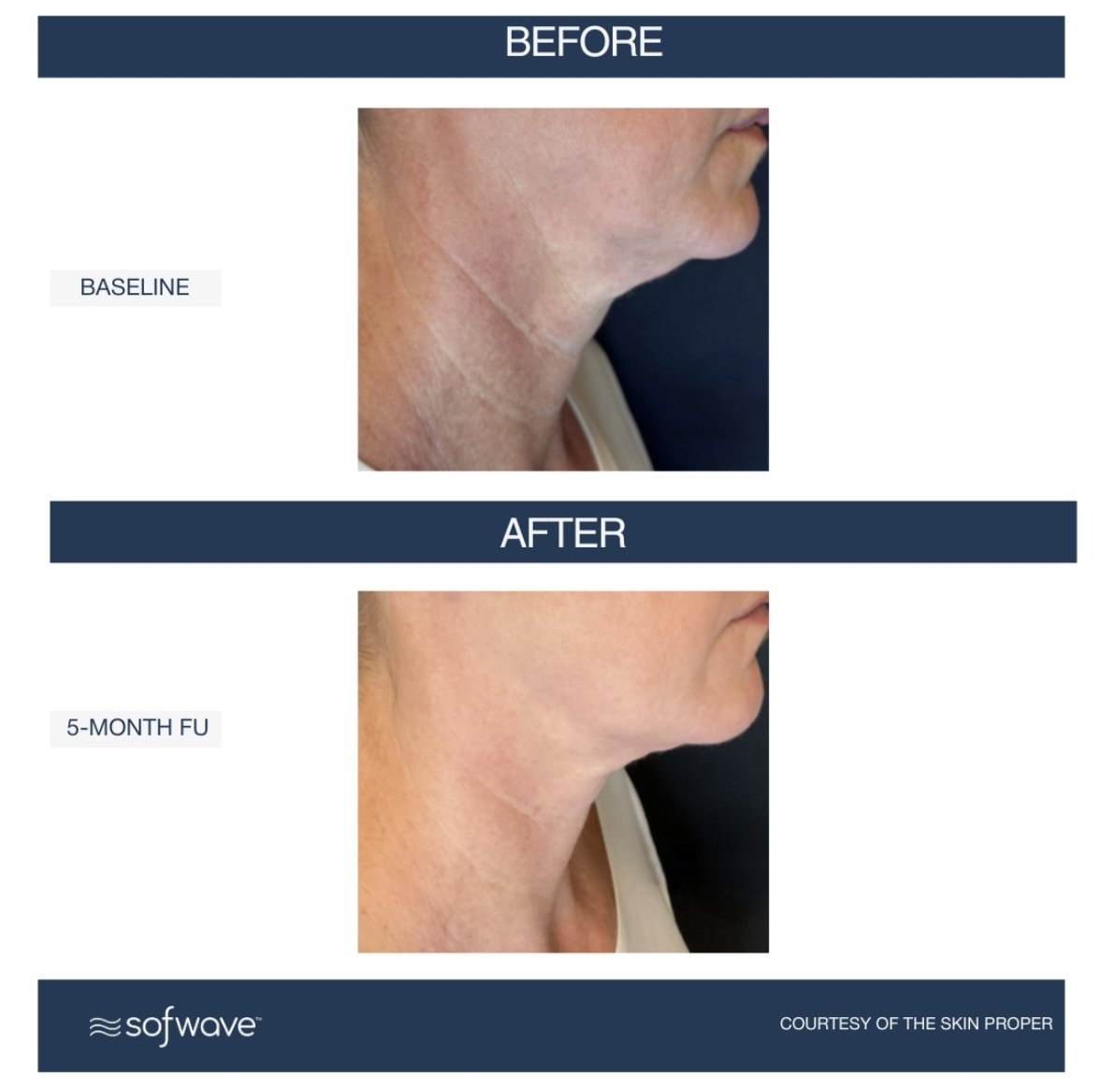
These results come from other clinics using Sofwave, shared by the manufacturer. Individual results vary.

Sofwave before and after on the jawline and neck, side view, 5 months after treatment
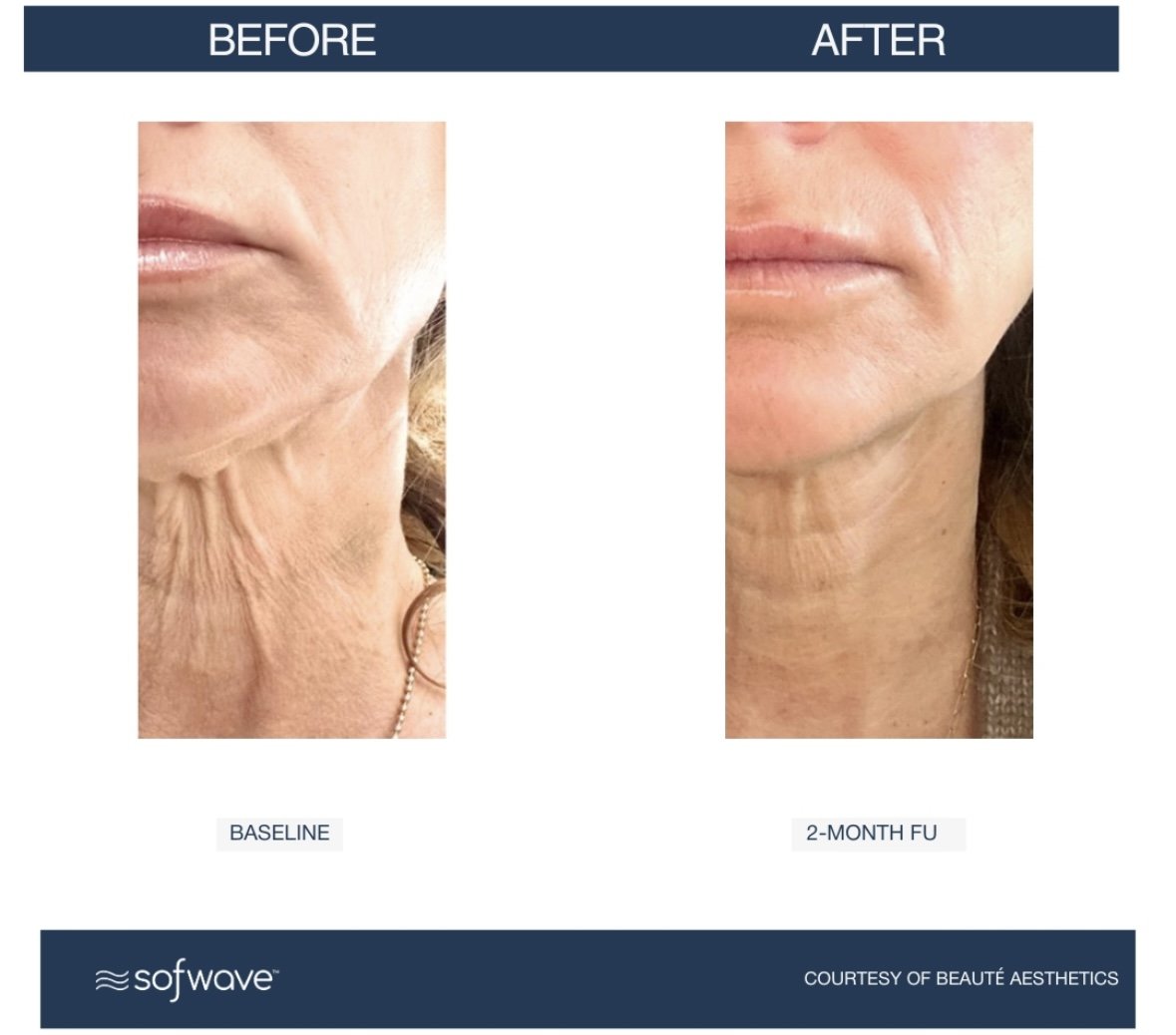
Sofwave before and after on the lower face and neck lines, 2 months after treatment
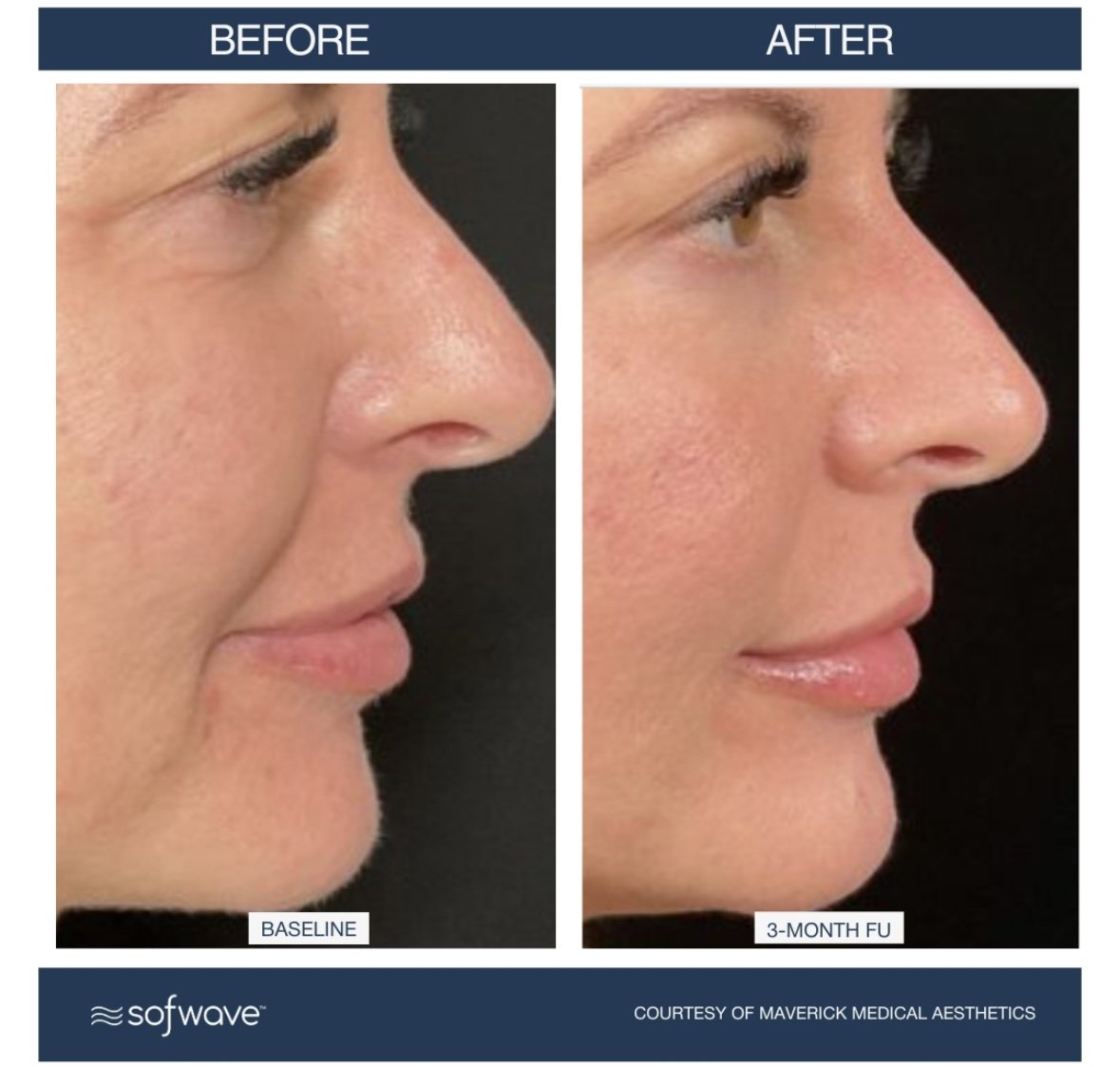
Sofwave before and after on the cheek, mouth and chin, side profile, 3 months after treatment
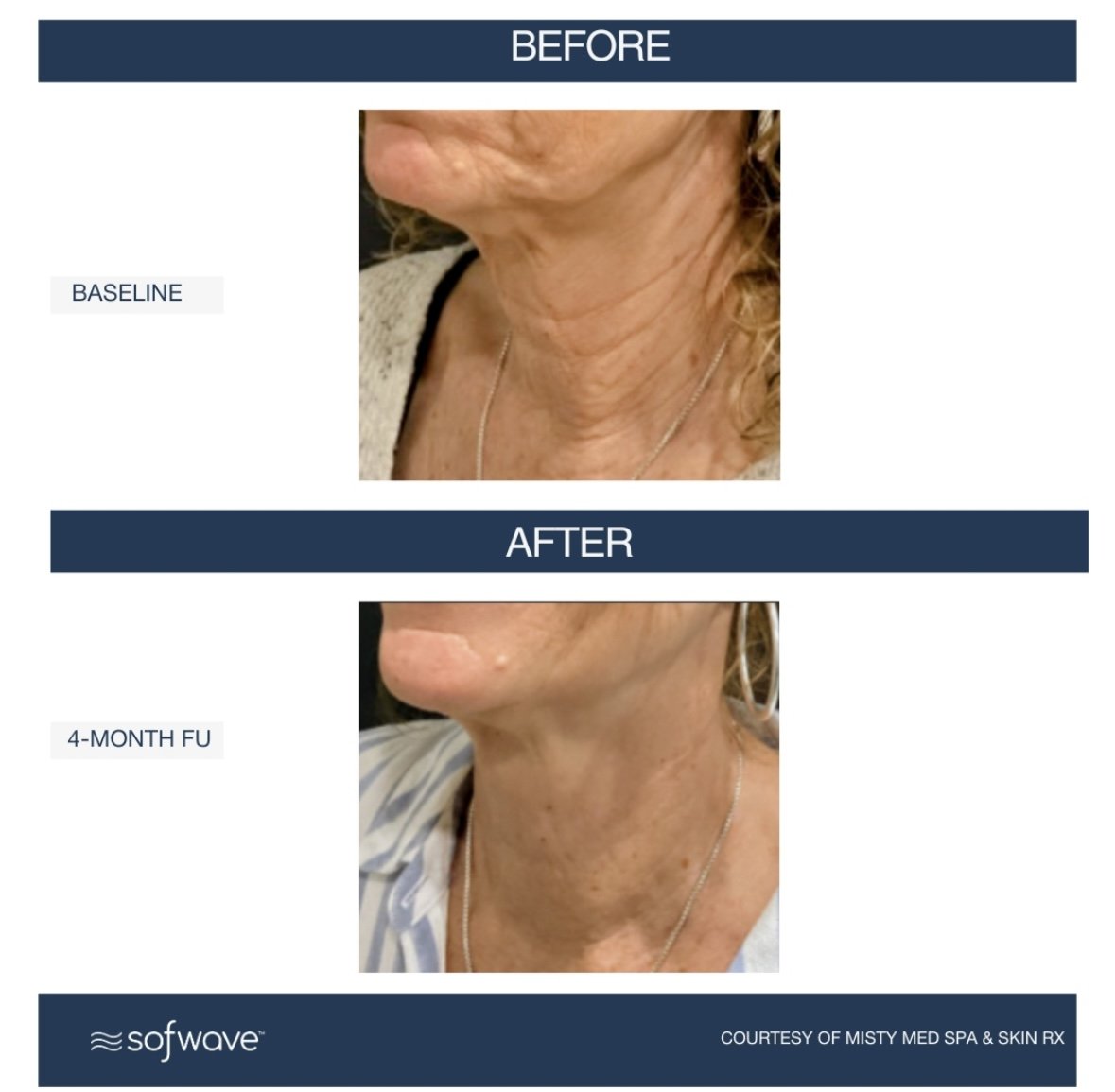
Sofwave before and after on the jawline and neck, 4 months after treatment
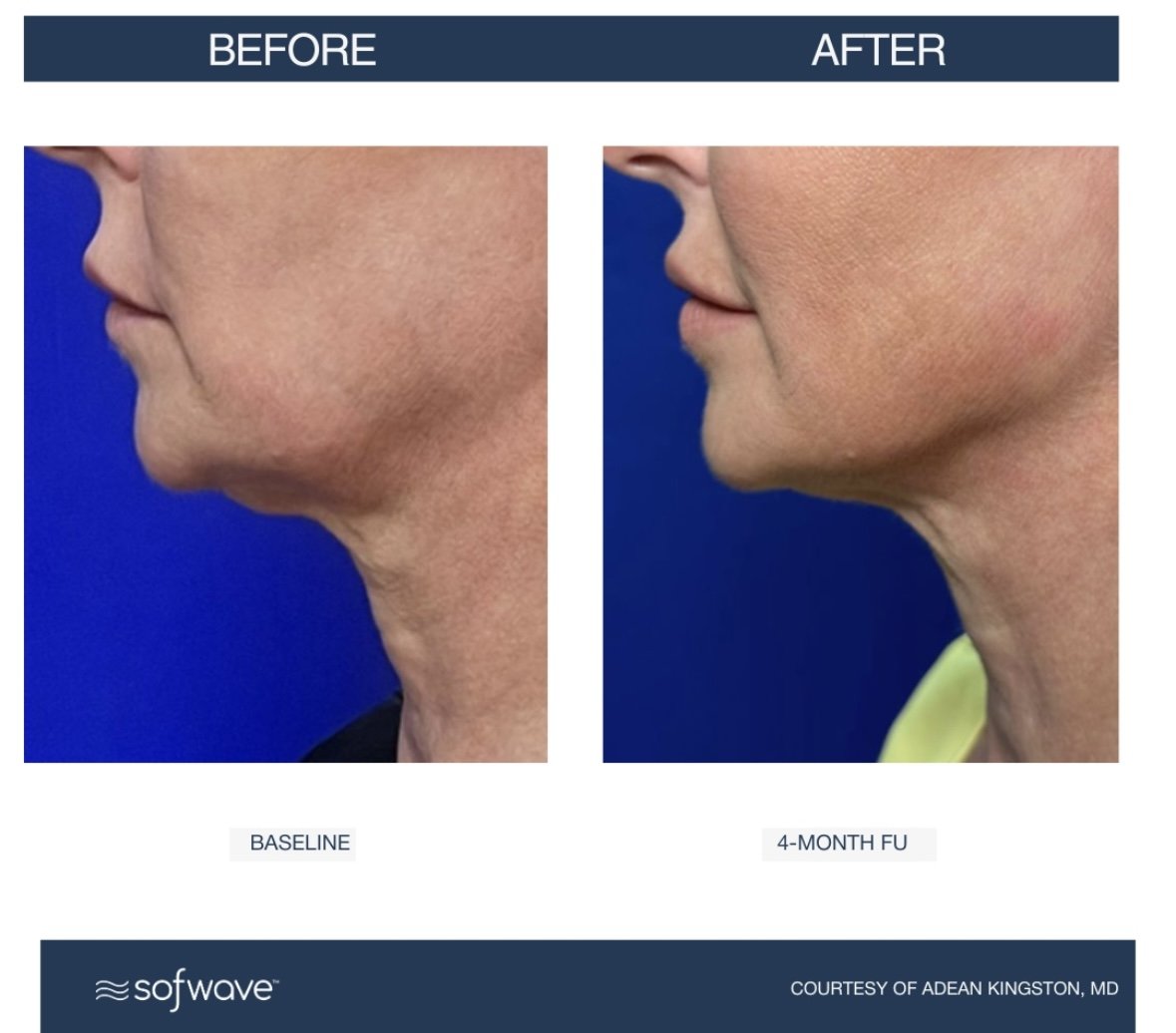
Sofwave before and after on the jawline and lower face, side profile, 4 months after treatment
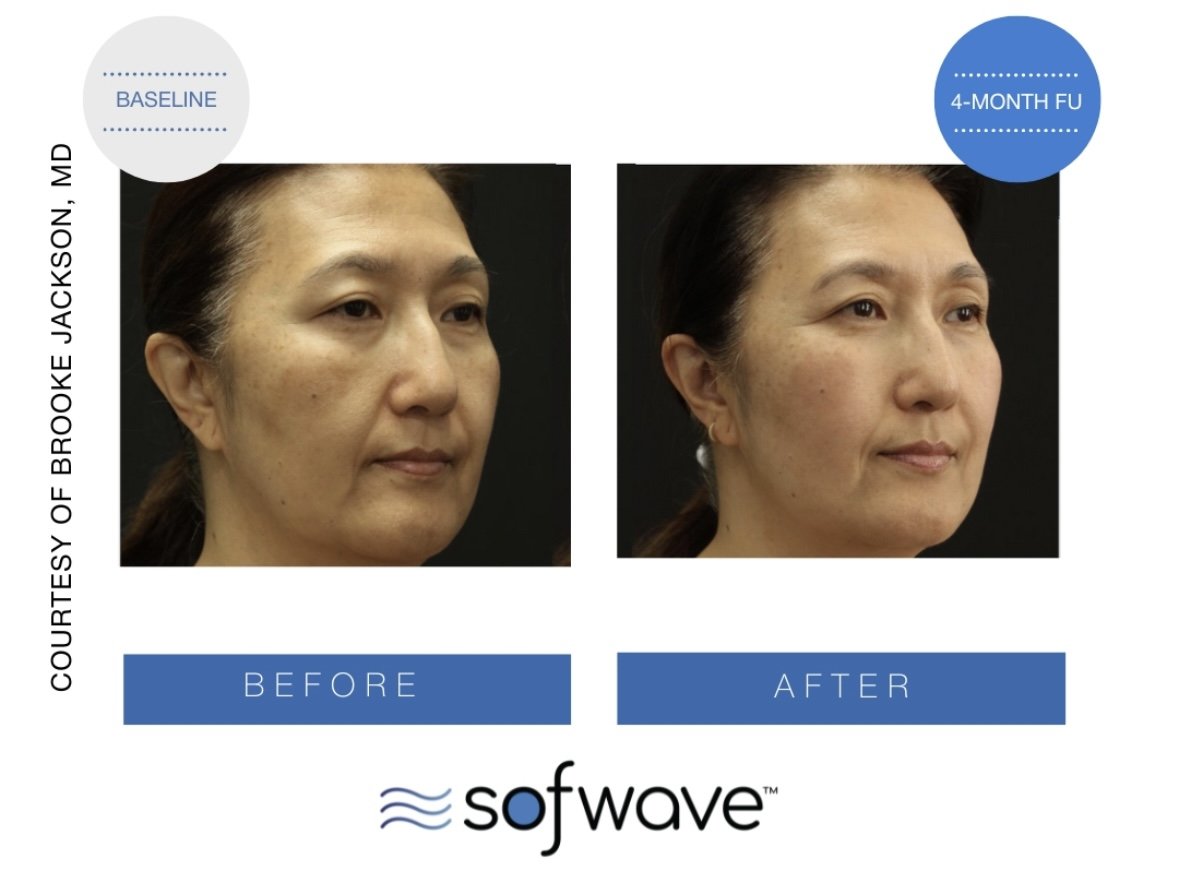
Sofwave before and after on the full face, three-quarter view, 4 months after treatment
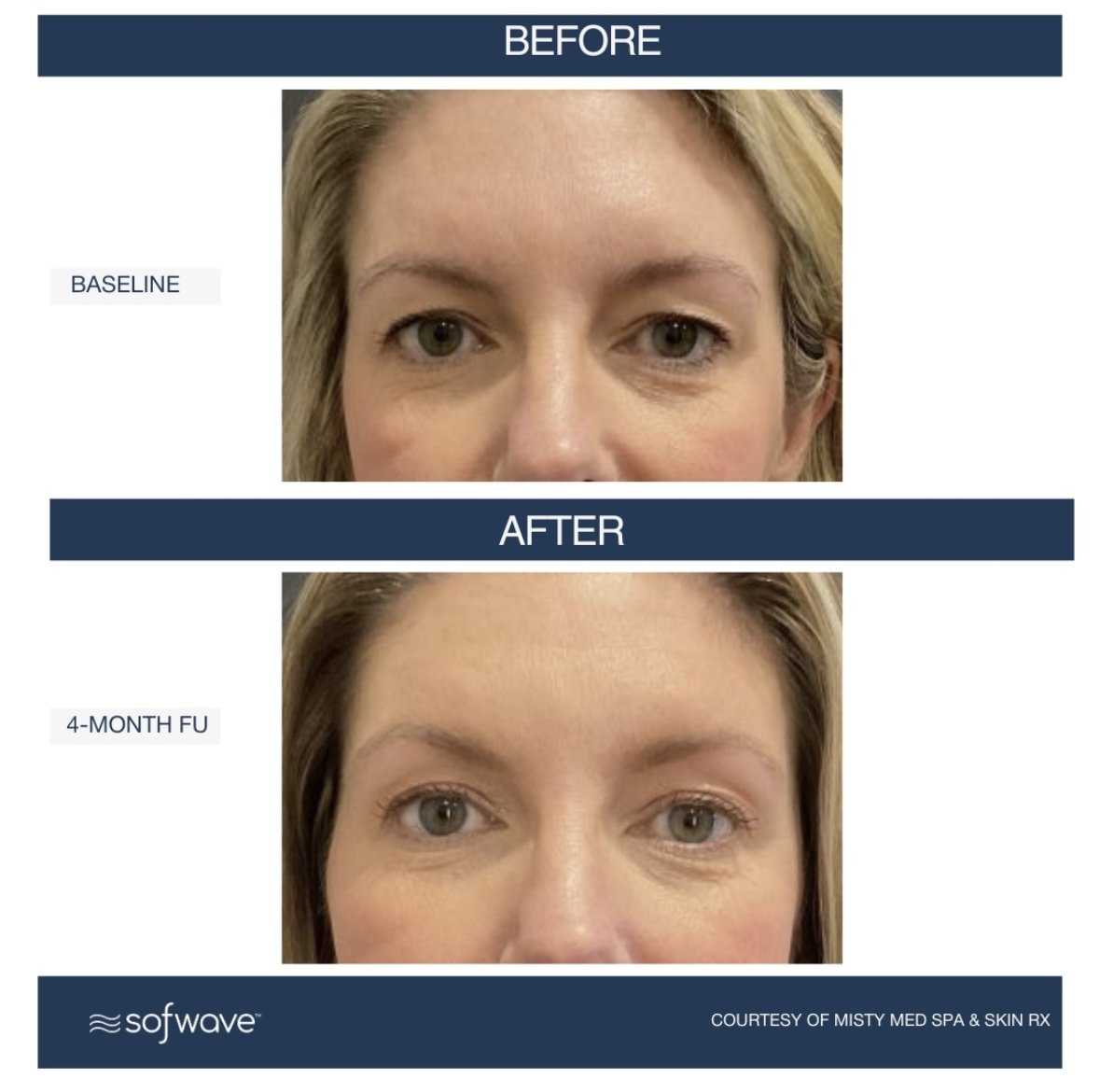
Sofwave before and after on the eye and brow area, 4 months after treatment
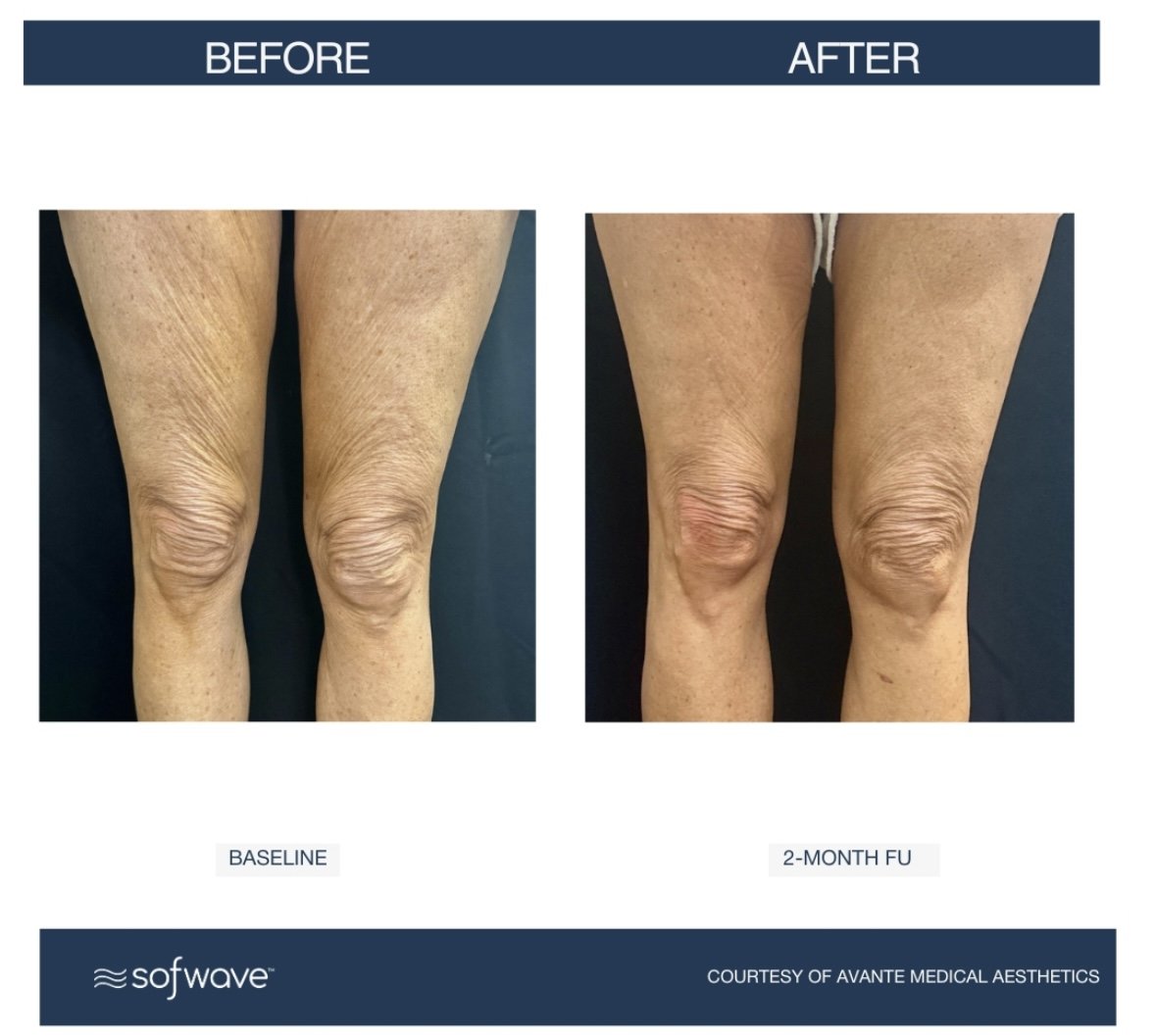
Sofwave before and after on the knees, 2 months after treatment
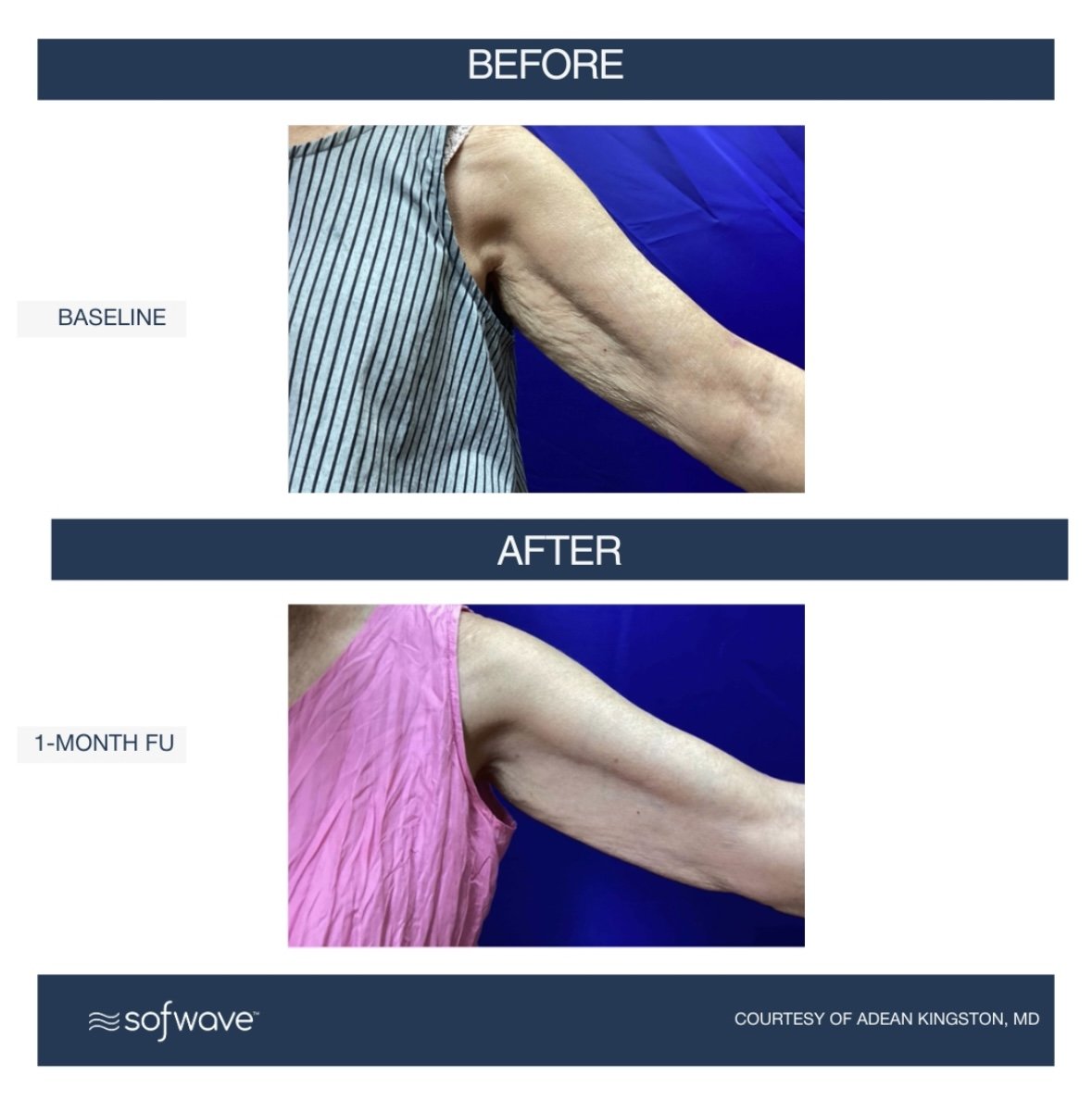
Sofwave before and after on the upper arm, 1 month after treatment

FAQs

Does Sofwave tighten skin?

Yes. Sofwave is specifically designed to tighten and firm the skin by stimulating collagen and elastin production in the mid-dermis. Results develop gradually over 8-12 weeks and continue to improve as collagen rebuilds.

Does Sofwave melt fat?

No. Sofwave's ultrasound energy travels horizontally within the mid-dermis and does not reach the subcutaneous fat layer. It will not reduce facial volume or cause hollowing - which is one of the main reasons many clients choose it over deeper ultrasound treatments like HIFU.

How does Sofwave compare to HIFU?

The main difference is depth. HIFU penetrates more deeply and can affect the fat layer, which may lead to volume loss in some clients. Sofwave stays within the mid-dermis, making it a more controlled option for skin tightening without the risk of unwanted fat reduction.

Can Sofwave be used on the body?

Yes. Sofwave is effective for body skin laxity, including postpartum loose skin on the abdomen, crepey skin on the upper arms, and laxity on the thighs, knees and buttocks. It works best where the concern is skin quality and firmness rather than fat reduction.

How does Sofwave compare to RF microneedling?

Sofwave and RF microneedling like Exion work differently and often complement each other. Sofwave focuses on lifting and firming through ultrasound energy in the mid-dermis. RF microneedling targets texture, scarring and overall skin quality through radiofrequency delivered into the skin. At Reshape Clinic, we can advise on whether one or both is right for your goals.

How many sessions of Sofwave are needed?

Many clients see meaningful results after a single session. Some choose additional treatments for enhanced or maintained results, typically every 6-12 months depending on their skin and goals.

Does Sofwave hurt?

Most clients describe it as short bursts of warmth or a mild heating sensation during treatment. The built-in cooling system keeps the surface of the skin comfortable throughout, and most people find it very manageable.

Is Sofwave safe?

Yes. Sofwave is FDA-cleared and CE-marked, and has been clinically tested for safety and effectiveness across all skin tones and types.

Key Takeaways

Sofwave is a precise, non-surgical skin tightening treatment that works to lift, firm and improve the skin.

If you're considering Sofwave in London, book a consultation at Reshape Clinic. We'll assess your skin, talk through your options, and create a treatment plan tailored to your goals.

‍

Microneedling for Acne Scars: How Dermapen Helps Improve Your Skin Texture

Face

5
min read

Microneedling for Acne Scars: How Dermapen Helps Improve Your Skin Texture

If you've tried serums, peels and prescriptions and your acne scars are still standing strong, you're not alone. Microneedling for acne scars works differently from anything you can apply to the surface. It signals your skin to rebuild from within. It stimulates the natural repair process that restores texture, smoothness and evenness over time.

What Is Microneedling and How Does It Work for Acne Scars?

Microneedling is also known as collagen induction therapy. It uses fine, controlled needles to create tiny micro-channels in the skin. These trigger the body's natural healing response, stimulating the production of collagen and elastin. These are the proteins that give your skin its structure, firmness and smoothness.

Acne scars form when inflammation disrupts these collagen fibres, leaving uneven texture behind. By encouraging new collagen production in targeted areas, microneedling supports skin remodelling. It encourages scar tissue to rebuild from beneath the surface, rather than simply treating what's on top.

At Reshape Clinic, we use the Dermapen. It's a medical-grade device that allows us to adjust needle depth and treatment intensity for each client. This precision matters when treating acne scars, where different scar types and depths need a tailored approach.

Who Is This Treatment Suitable For?

Dermapen microneedling works well for people who have indented (atrophic) acne scars, uneven skin texture, or post-acne skin concerns that haven't responded to topical products. It's also a good option if you want visible improvement without surgery, lasers or significant downtime.

It may not be the right fit if you have:

  • Active acne
  • Raised or keloid scars
  • Certain skin conditions

We will assess your skin carefully at your consultation before recommending any treatment.

How Effective Is Microneedling for Acne Scars?

Microneedling is one of the most studied minimally invasive treatments for acne scarring. It has a substantial body of clinical evidence behind it. Rather than disrupting the skin with chemicals or heat, it works with your skin's own biology. It is a reliable option for long-term improvement without aggressive intervention.

Results build gradually across a course of sessions. Consistency is key. Each treatment adds to the last, with collagen continuing to develop and remodel for weeks after each appointment.

Microneedling for Acne Scars Before and After: What to Expect

These results come from other clinics using Dermapen, shared by the manufacturer. Individual results vary.

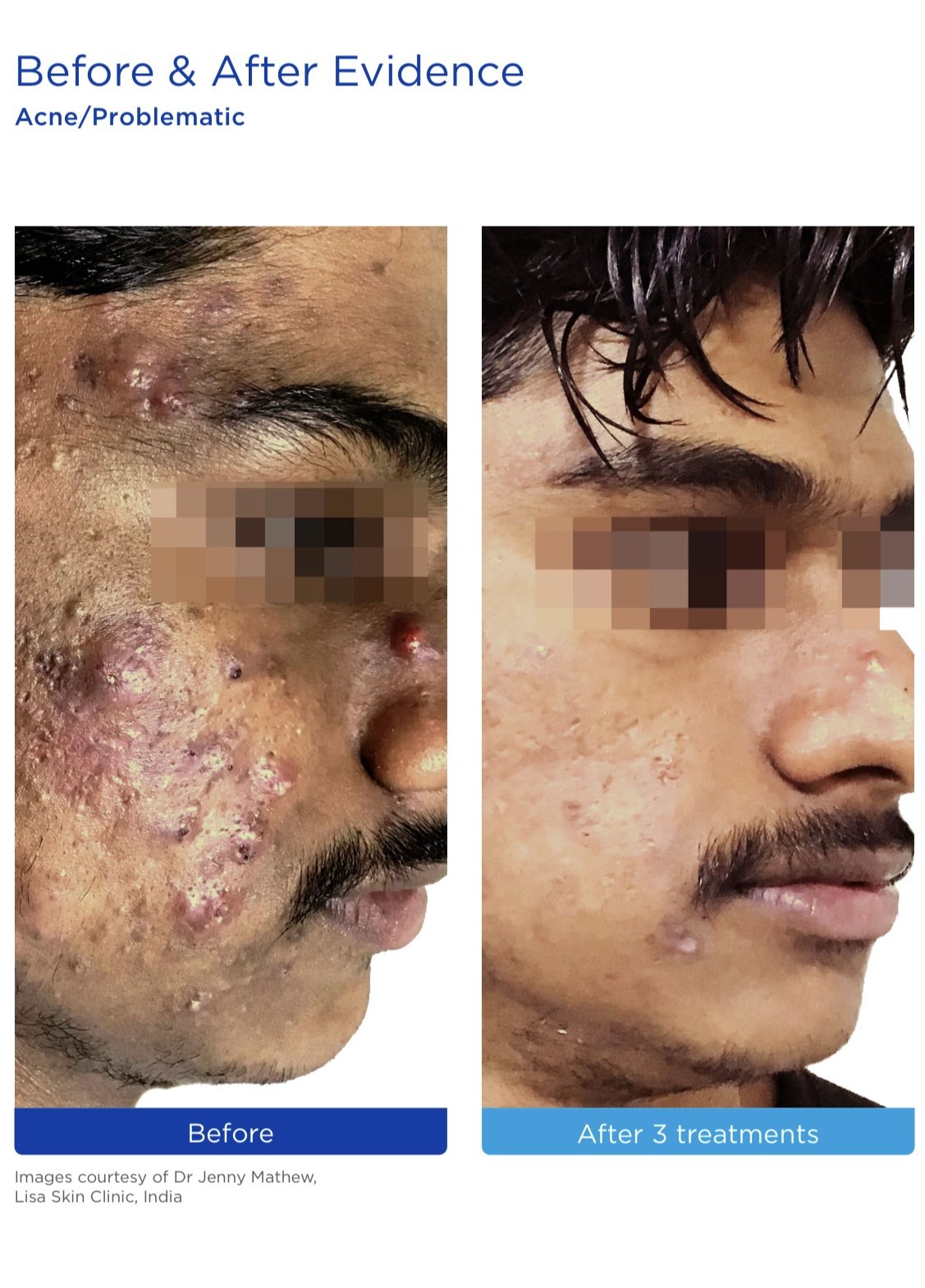
Dermapen before and after on severe acne and acne scarring on a man's cheek, after 3 treatments
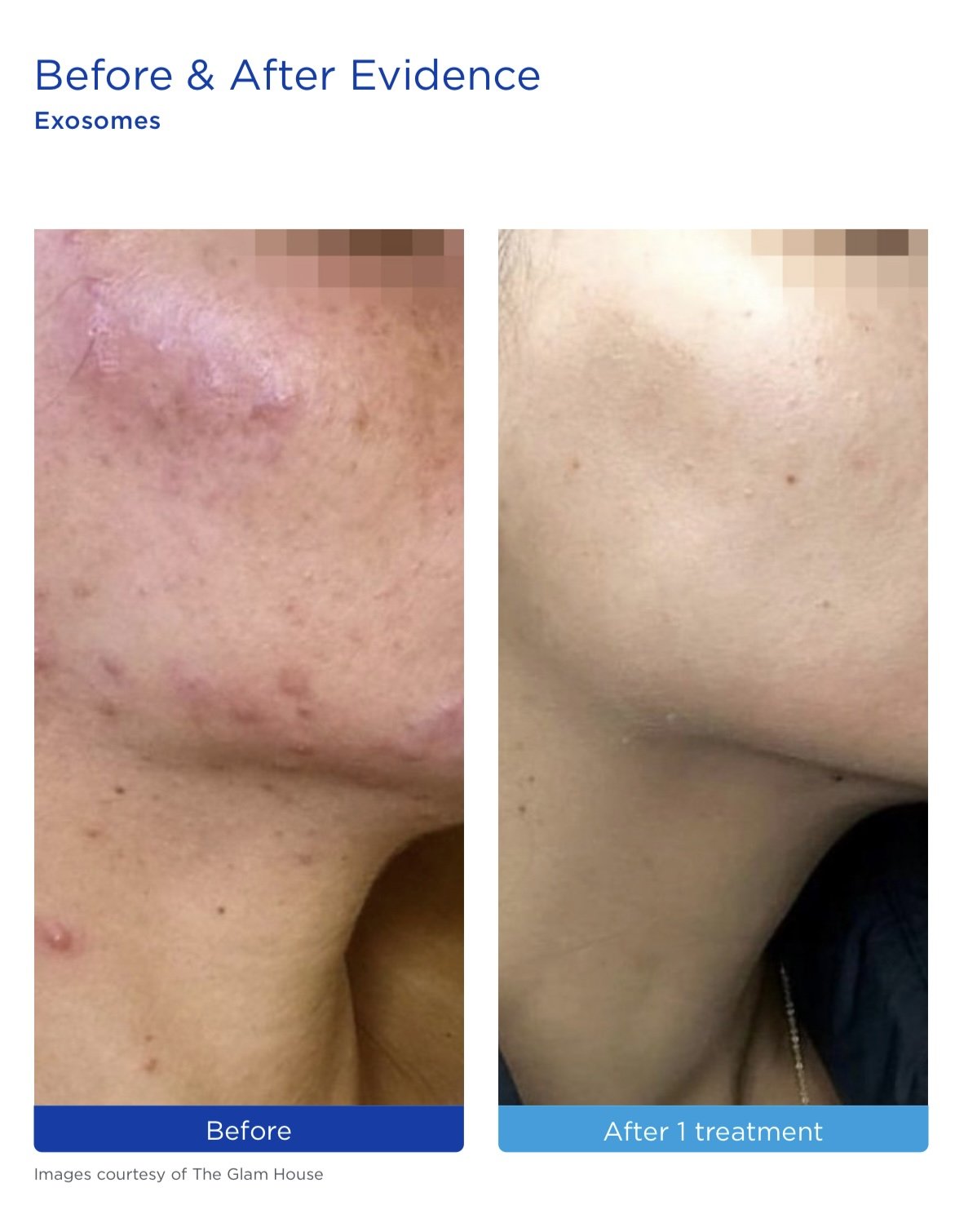
Dermapen with exosomes before and after on acne marks on the cheek and jaw, after 1 treatment

This treatment supports a gradual, natural-looking improvement - not an overnight transformation. Over the course of Dermapen sessions, many clients notice:

  • Smoother skin texture,
  • Softer and less defined acne scars
  • More even skin tone (including improvements in post-inflammatory hyperpigmentation),
  • Stronger, healthier-feeling skin overall.

Dermapen before and after results reflect steady refinement rather than a dramatic change. The most noticeable improvements often appear in the weeks after your final session. This is because collagen remodelling will continue beneath the surface.

What Types of Acne Scars Can Dermapen Treat?

Atrophic (Indented) Acne Scars

Dermapen microneedling is most effective for atrophic scars - the indented type caused by collagen loss after a breakout. These include:

  • Rolling scars (broad, shallow depressions with sloping edges)
  • Boxcar scars (defined depressions with steeper edges)
  • Ice pick scars (narrow and deep).

Rolling and boxcar scars tend to respond well to a course of treatment, with the skin gradually filling and smoothing over sessions. Ice pick scars can be more resistant and may benefit from a combined approach - something we can discuss at your consultation.

Deep Acne Scars

For deeper scarring, Dermapen requires more sessions to achieve meaningful improvement. The skin needs time between appointments to heal and rebuild, which is why we space sessions around four weeks apart.

How Many Microneedling Sessions for Acne Scars?

Most clients benefit from 3-6 sessions, spaced approximately every 4 weeks. This allows your skin time to heal and respond fully between treatments.

The exact number you'll need depends on:

  • The type and depth of your scarring
  • Your skin's natural response
  • The level of improvement you're aiming for.

At your consultation, we'll give you a clear and honest recommendation, so you know what to expect before you begin.

Enhancing Your Dermapen Results

To improve your Dermapen results, we sometimes combine microneedling with targeted treatments that support skin repair and regeneration. These may include:

  • Uber Pro Peel: a controlled chemical exfoliant that refines surface texture and improves skin clarity alongside the deeper collagen work of microneedling
  • Exosomes: cell-signalling molecules that support healing and amplify collagen production after treatment
  • Mesotherapy (mesoglides): a deep hydration and nourishment treatment that strengthens the skin's foundation and helps it respond more effectively

These combinations are recommended where appropriate, not applied as standard. Everything is based on what your skin actually needs and we will assess this for you.

Professional Dermapen vs At-Home Microneedling

At-home dermarollers are widely available and often marketed as a convenient alternative. However, they don't deliver the same results as professional microneedling for acne scars. The difference comes down to precision and control.

With Dermapen microneedling at Reshape Clinic, you benefit from:

  • Adjustable needle depth for targeted treatment of different scar types
  • Consistent medical-grade penetration at the correct angle (rather than the dragging motion of a roller)
  • A controlled and sterile clinical environment
  • A practitioner who adapts each session to how your skin is responding.

This level of control is essential when treating Dermapen acne scars. Inconsistent depth or technique can cause:

  • Irritation
  • Uneven results
  • Post-inflammatory pigmentation - the opposite of what you're trying to achieve.

Is Professional Microneedling Worth It?

If your goal is genuine, visible improvement in acne scarring, professional treatment offers a more reliable and structured approach than anything you can replicate at home. Each session is tailored to your skin's progress, giving you steady results built on a clear plan.

What to Expect at Reshape Clinic, London

Your Dermapen Consultation

At your Dermapen London consultation, we take time to assess your skin properly. We will look at the type, depth and pattern of your acne scars, your skin tone, and any other concerns you'd like to address. We'll be honest about what's achievable and how many sessions we'd recommend. You can then make an informed decision before committing to anything.

All treatments at Reshape are carried out by trained aesthetic practitioners in a professional clinical environment. Individual results vary, and all treatments are subject to a pre-treatment consultation.

During and After Your Treatment

A Dermapen session is quick and generally well tolerated. Depending on your sensitivity, a topical numbing cream may be applied beforehand to keep you comfortable.

After your session, your skin may look red and feel warm - similar to mild sunburn. This typically settles within 24-48 hours, and some light flaking may follow as the skin renews itself. Most clients return to normal activities the following day.

Over the following weeks, collagen production continues beneath the surface. This will lead to gradual improvements in texture, smoothness and the appearance of your scars. Results develop even after your course of treatment is complete.

FAQs

Does microneedling work for acne scars?

Yes. Microneedling for acne scars stimulates collagen and elastin production. This helps to rebuild the skin's structure in areas damaged by scarring. It's particularly effective for indented (atrophic) scars and uneven skin texture. Results develop gradually across a course of sessions. For most clients, consistent treatment leads to meaningful and lasting improvement.

How long does it take to see results?

You may notice early improvements in skin texture within a few weeks of your first session. More significant changes, particularly in scar depth and skin tone, typically become visible over 2-6 months, as collagen continues to remodel after each treatment. Results often keep improving after your final session.

How many microneedling sessions will I need for acne scars?

Most clients need 3-6 sessions spaced around four weeks apart. The exact number depends on the type, depth and extent of your scarring and how your skin responds. At your consultation, we'll give you a personalised recommendation.

Is Dermapen better than a dermaroller?

Yes, for treating acne scars specifically. Dermapen microneedling is more precise, consistent and effective than at-home dermarollers. It uses a motorised stamp action for vertical needle penetration rather than a rolling drag. It also allows the practitioner to adjust depth for different scar types - which is critical for safe, effective treatment.

Is there any downtime after Dermapen?

Downtime is minimal. Most clients experience redness and warmth for 24-48 hours, similar to mild sunburn. Some light flaking may follow. Most people return to normal activities the next day. We do however advise to avoid heavy exercise, swimming and direct sun exposure for a few days post-treatment.

Key Takeaways

Microneedling for acne scars is one of the most effective non-invasive ways to improve skin texture and reduce the appearance of scarring, by rebuilding the skin's structure from within.

At Reshape Clinic in London, our approach is always personalised. We assess your skin carefully, set honest expectations, and build a plan around your specific goals.

Ready to find out what's possible for your skin? Book a consultation at Reshape Clinic London and we'll give you a personalised and clear plan.

‍

The Beginner's Guide to Non-Surgical Aesthetic Treatments for the Face

Face

5
min read

The Beginner's Guide to Non-Surgical Aesthetic Treatments for the Face

Thinking about aesthetic treatments for your face but not sure where to begin? You're not alone. Most people feel overwhelmed by the options. This guide breaks it down simply, explaining the most effective non-surgical aesthetic treatments available. From skin tightening to facial lifting, you can learn what each one does and which may suit your goals.

What Are Aesthetic Treatments for the Face?

Aesthetic treatments are non-surgical procedures designed to improve how the face looks and feels. They usually require no surgery, general anaesthetic or significant downtime. They range from treatments that work on the deeper structure of the face, to those that refine the surface.

At Reshape Clinic in London, we focus on non-invasive aesthetic treatments that address the right layer of the face for each concern. Understanding those layers is the key to choosing treatments that actually work.

How the Face Changes Over Time

Before choosing any aesthetic treatment, it helps to understand what's actually changing. Facial ageing isn't just about the skin's surface. It happens across multiple layers - and knowing which layer is most affected shapes which treatment is most relevant.

Collagen and elastin decline from your late 20s, making skin less firm and resilient. Facial fat pads shrink and shift, reducing volume and altering contour. Muscle tone reduces, removing the internal support that keeps features lifted. These changes work together, which is why treating just one layer rarely gives the full picture.

The most effective approach to facial aesthetics treats the face as a whole. That means starting with structure, supporting it with skin tightening, and refining the surface. This is the client journey we build at Reshape Clinic, and it's what separates a treatment plan from a one-off appointment.

Find out more about how the face changes over time here.

How to Approach Facial Aesthetic Treatments as a Beginner

If you're new to aesthetic treatments, the most important thing is having a clear starting point. Rather than choosing a treatment based on what you've heard of, it's more effective to identify which layer of your face needs the most support, and work from there.

At Reshape Clinic, we think about the face in three layers: structure, firmness and surface. Each layer has treatments best suited to it, and the journey typically moves through them in that order.

Step 1: Start With Structure and Lift

The foundation of any facial treatment plan is structure. If the muscles and deeper tissue have lost tone, no amount of surface treatment will fully restore definition. This is why we often recommend starting here, particularly for clients noticing a softer jawline, heavier brow, flatter cheeks or reduced facial definition.

EMFace is the treatment we use for this. It's the only non-surgical, needle-free face lift that works on both the skin and the underlying facial muscles simultaneously. It combines radiofrequency (RF) to stimulate collagen and HIFES technology to contract and strengthen the facial muscles. This restores the lift and definition that diminishes with age. Clinical studies show it can increase muscle tone by 30% and reduce wrinkles by 37% on average. For clients who want a non surgical face lift without needles or downtime, EMFace is the most effective starting point.

Step 2: Support Firmness and Skin Tightening

Once structural support is in place, the next step is improving the firmness and quality of the skin itself. This is where skin tightening treatments come in - working within the deeper layers of the skin to stimulate collagen and elastin, improving laxity, smoothing fine lines and improving overall tone.

Sofwave uses ultrasound to target the mid-dermis - the layer most responsible for skin firmness. It's one of the best skin tightening treatments for the face, delivering gradual lift and tightening with no needles and no downtime. Crucially, it doesn't affect the fat layer beneath the skin. This makes it a safe and predictable option for facial tightening without volume loss.

Exion combines radiofrequency with targeted ultrasound to improve skin structure, hydration and tone at a deeper level. It's particularly effective for crepey skin, fine lines and overall skin quality. It can be enhanced with optional RF microneedling for clients who want more comprehensive resurfacing alongside tightening. Together, Sofwave and Exion represent two of the best skin tightening treatments for the face currently available.

Step 3: Refine the Surface

The final step is to focus on the skin's surface - improving texture, reducing scarring, minimising pores and addressing concerns like uneven tone and dullness. These treatments are often what people think of first when they consider facial aesthetics. However, they work best when the layers beneath are already supported.

Dermapen 4 microneedling creates thousands of tiny channels in the skin, triggering collagen production and helping the skin repair and renew from within. It's the treatment of choice for acne scars, enlarged pores, uneven texture and fine lines. For enhanced results, it can be combined with our Uber Peel or Exosomes add-on, both of which accelerate skin renewal and maximise the outcome of each session.

Which Facial Aesthetic Treatment Is Right for You?

If Your Face Looks Less Defined

If you're noticing a softer jawline, flatter cheeks, heavier brows or reduced facial definition, start with EMFace. It works on the muscle and structural layer that surface treatments simply can't reach, restoring lift and contour from within.

If Your Skin Feels Looser or Less Firm

If laxity, crepey skin or fine lines are your main concern, Sofwave or Exion is the most relevant starting point. Both stimulate collagen and improve firmness from within. A consultation will help identify which suits your skin best.

If Texture or Scarring Is Your Priority

If you're dealing with acne scars, enlarged pores, uneven tone or dullness, Dermapen 4 is the most targeted option. It works on the surface and upper skin layers, refining and renewing over a course of sessions.

If You Want the Most Complete Result

For clients who want to address multiple layers, we often recommend a combination treatment plan. Popular combinations at Reshape Clinic include EMFace and Exion for structural lift alongside skin quality. EMFace and Sofwave are a great combination for lift and tightening. Dermapen with Exion work well together for texture refinement and deeper skin renewal. We will build a plan around your skin and your goals, not a generic protocol.

Best Aesthetic Treatments for the Face: At a Glance

Best Non-Surgical Face Lift: EMFace

  • Needle-free
  • No downtime
  • Works on both muscle and skin
  • Results last up to two years.

Explore EMFace.

Best Skin Tightening Treatments for the Face

  • Sofwave for lift and firmness.
  • Exion for tightening, hydration and optional RF microneedling.

Best Treatment for Skin Texture and Scarring: Dermapen 4

  • Advanced microneedling for acne scars, pores and uneven texture.
  • Can be combined with Uber Peel or Exosomes.

Explore Dermapen 4.

FAQs

Are non-surgical aesthetic treatments safe?

Yes, when carried out by trained practitioners. At Reshape Clinic, all treatments are performed by qualified aesthetic practitioners and are subject to a consultation beforehand. We only recommend treatments that are clinically tested and appropriate for your skin.

Can I combine facial aesthetic treatments?

Yes, and combining treatments often delivers better results than any single option alone. Popular combinations at Reshape include EMFace and Exion, EMFace and Sofwave, and Dermapen with Exion. We'll build a plan that makes sense for your skin, goals and budget.

How long do non-surgical facial treatment results last?

This varies by treatment. EMFace results typically last up to one to two years. Sofwave and Exion results develop over 2-3 months and last around 6-12 months, with maintenance sessions recommended. Dermapen results build over a course of sessions and are maintained with periodic top-ups.

How do I know which treatment is right for me?

The best way is a consultation. We'll assess your skin, understand what's driving the changes you're seeing, and recommend the most appropriate treatments in the right order. There's no pressure to commit to anything at the consultation stage.

Key Takeaways

There's no one-size-fits-all approach to facial aesthetic treatments. The best results come from choosing the right treatment for your own concerns and goals, and building a plan that works across structure, firmness and surface together.

Book a consultation at Reshape Clinic London. We'll assess your face properly, explain what's driving the changes you're seeing. We'll then build a treatment plan around your structure, skin and goals - not guesswork.

‍

Lorem ipsum dolor sit amet elit

Lorem ipsum dolor sit amet, consectetur adipiscing elit, sed do eiusmod tempor incididunt ut labore et dolore magna aliqua.